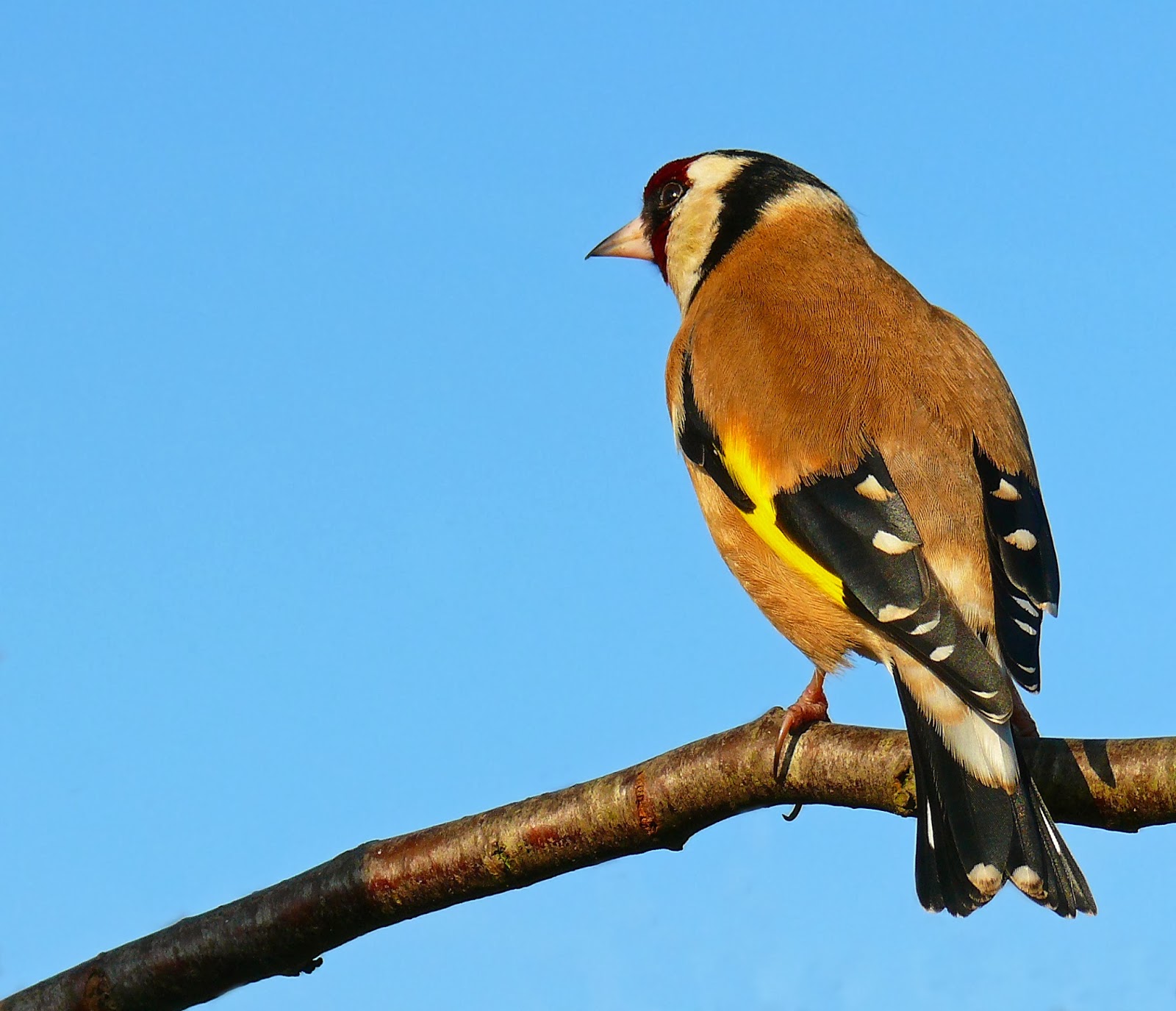
The "charming" bird. By Keats, Raphael, Vivaldi, Linnaeus, Christ, King Harold & … me.

I’m of course talking about the (European) goldfinch.
What – you didn’t work that out from the clues?
Read on then.
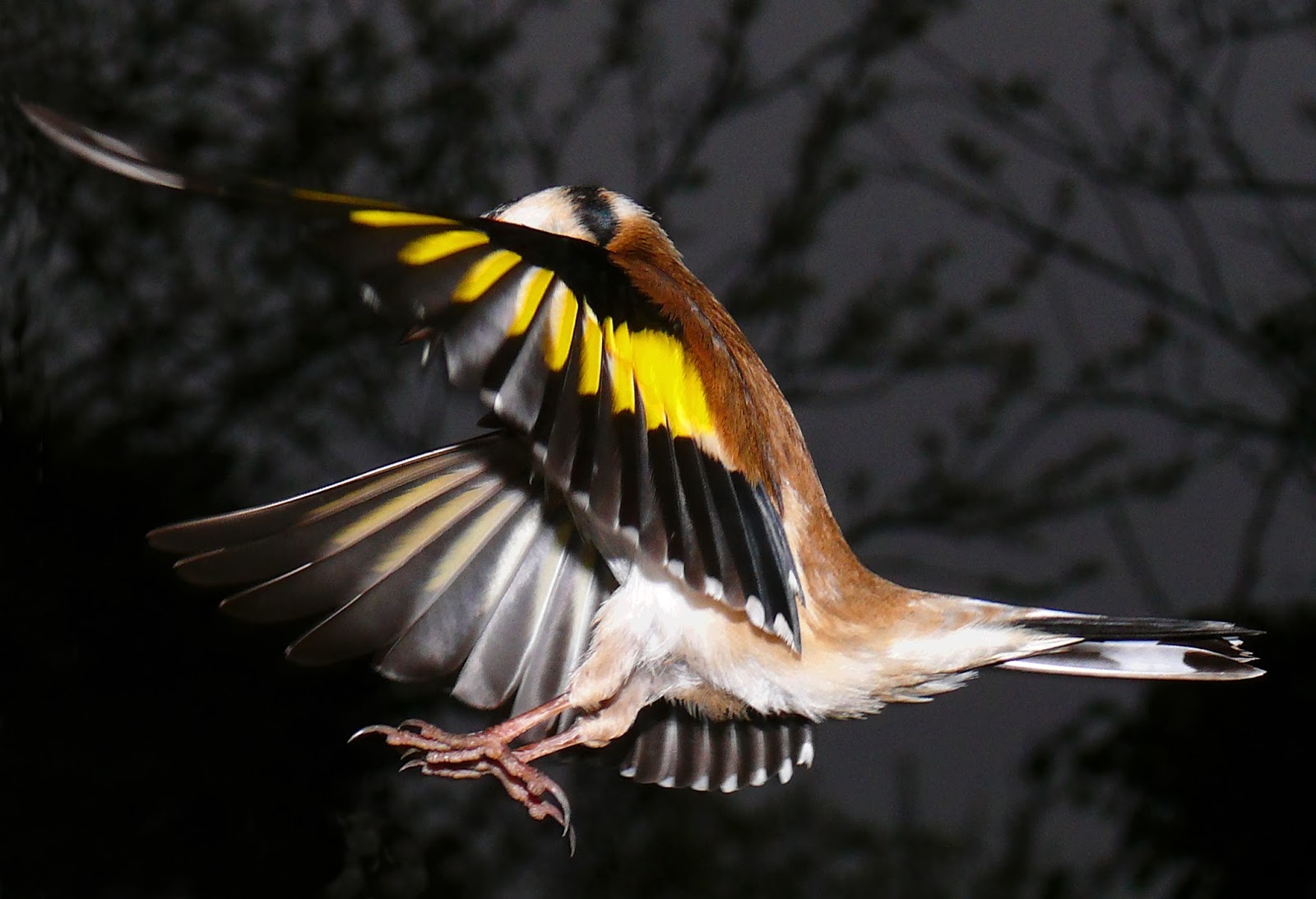
I’m posting this blog about the goldfinch as we are overwhelmed with these beautiful, bold finches in the garden right now – and as always they provide a very welcome splash of colour and noise as we head into the dreich days of winter.
As a strange (I’m sure) boy, interested in worms and moths and birds... it was years and years before I saw a goldfinch. These finches were not common garden visitors thirty years ago (or even twenty) but in recent times they have boomed in terms of numbers and are seen in many gardens up and down the land these days.
Along with long-tailed tits (and many other spp.) the goldfinch sticks a resounding two fingers (or feathers) up to those people who insist the UK’s domestic cat population is decimating garden birds – there is absolutely no evidence at all to suggest that is happening at all.
I digress.
Goldfinches were originally known as “thistle finches” because of their feeding habits – although they tend to prefer the prickly Dipsacaceae (teasels) to Asteraceae (thistles). It always tends to be the male goldfinches who feed on teasels though (rather than the females) as the males' longer beaks provide a better tool for extracting the hard-to-reach seeds.
Not only did thistles give the goldfinch their old vernacular name, but also their scientific name (Linnaeus 1758). Fringilla (or now Carduelis) carduelis (carduelis) is derived from the Latin for thistle – carduus.
So. Carduus is the Latin term for a thistle (hence cardoon, chardon in French), and Cardonnacum is the Latin word for a place with thistles.
This is believed to be the origin of name of the Burgundy village of Chardonnay, Saône-et-Loire, which in turn is thought to be the home of the famous Chardonnay grape variety.
Goldfinches were also known as “King Harold’s bird” here in England. Visitors to this site from outside the UK might like to be reminded that King Harold was our last Anglo Saxon King here, who lost the Battle of Hastings to his Norman Conqueror, William in 1066. A French arrow pierced Harold’s eye – there was probably a bit of blood to his face – and that is how the crimson-faced goldfinch got its old English name.

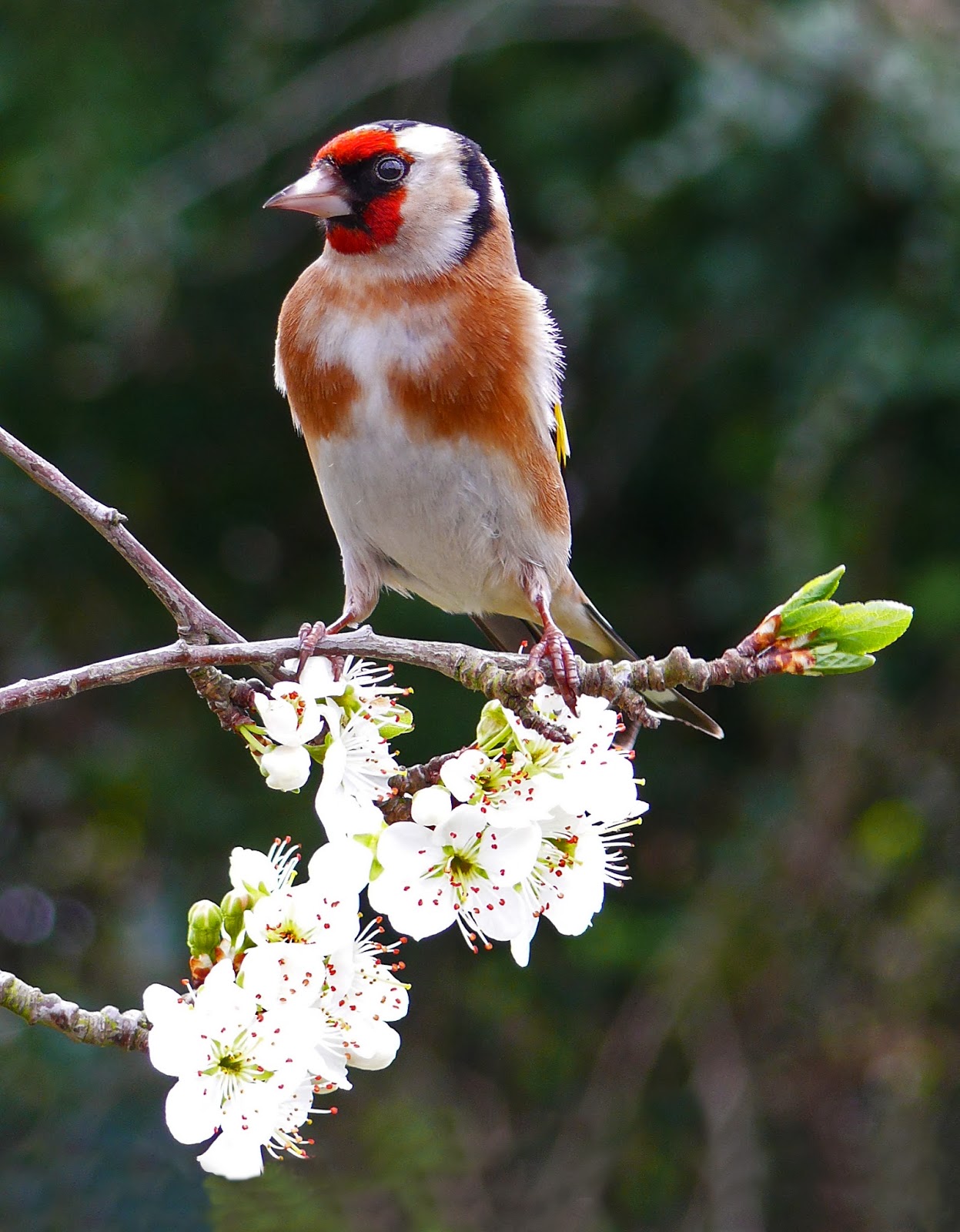
Across Europe though, the European goldfinch is often known as a symbol of Christ’s “passion” (the last bit of his life, including his crucifixion) because of the birds’ habit of feeding amongst thorns. Not really thorns mind, spiky-leaved thistles, but hey ho, the whole thing is a fairy tale after all. A goldfinch is said to have plucked a thorn from Christ’s crown on the cross, whereby a drop of blood fell on the bird’s face – and there it remains.... forrrrevvvver morrrrre.
I guess the most famous reference to the goldfinch being a religious symbol is Raphael’s Madonna del cardellino (Madonna of the goldfinch) of 1506, where the viewer is confronted with the sight of John the Baptist (rather than Joe le taxi) presenting the babbby jeeezus with a goldfinch as a forewarning of what will befall the saviour, one day. There are plenty of other examples of the saviour bird cropping up in paintings throughout the renaissance period.
It was indeed years before I saw a goldfinch (even though the garden we had at our childhood house was huge –and regularly had lesser spotted woodpeckers and spotted flycatchers - hell, I had even seen Scottish Crossbills, Capercailles and Crested tits in Scotland before I saw a Goldfinch in England) but throughout my teens and indeed twenties after I left home, I didn’t see that many.
I took a week in steamy Singapore once and of course saw thousands of goldfinches there (and other birds such as zebra finches) crammed into tiny cages in the bustling back streets - all for sale of course.
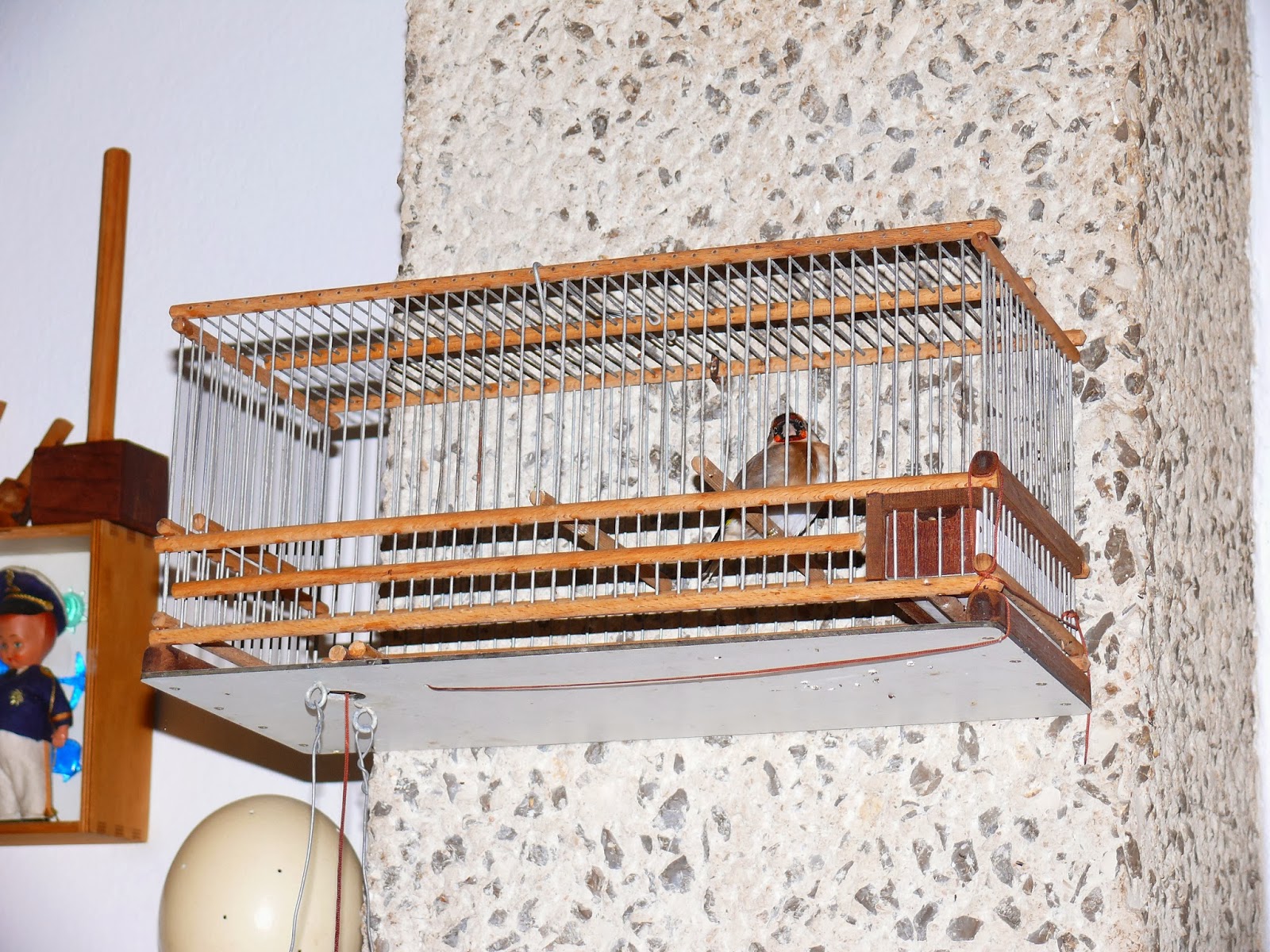
I happened across another caged goldfinch on holiday in Mallorca ten years or so later – at our favourite restaurant in Port de Pollenca – “Simbad’s”. (Do check out their paella if you’re ever up in that neck of the woods). Goldfinches are kept in cages all over the world, and often crossed with canaries to provide the ultimate caged songbird. Their beautiful song is their undoing I’m afraid, in many cases.
When I moved back out of London with my then girlfriend (now wife) a handful of years ago now, we took a tiny house in the centre of town, next to a recreation ground, under an avenue of large lime trees. I used to hear the occasional twittering of goldfinches overhead and decided to tempt them down from their lofty perches.
You know, I always thought niger seed was over-sold for goldfinches (or any bird for that matter) so I filled up some feeders with sunflower hearts and waited.
It took a few weeks, but sure enough, the goldfinches eventually found the seeds and for the entire time we were in that tiny house, with the tiny garden (6’ wide), we had a pair of goldfinches to watch from the back window.
Each table at my & my (now) wife’s wedding was themed to either a bird or a bee (the wedding breakfast theme was “the birds and the bees” in Darwin’s home town of Shrewsbury – well… for a zoology postgraduate and a biology teacher the wedding was always going to be somewhat animalian! On each table sat one of my photographs of either a bird or a bee and the goldfinch took pride of place on table number 1 (if memory serves me right).
I sit here now, five or so years on, in our first owned home, 10 miles east of that tiny garden, and more than a dozen of these striking birds are fluttering around the feeders – it’s quite a sight and provides some much needed energy, colour and sound to the darkening, cold, wet garden and sky. The collective noun for a group of goldfinches is a "charm". I can see why.
But this is goldfinches all over to me. They always seem “happy” – they twitter to each other, in the manner of a little burbling, silvery stream – they’re constantly burbling to each other overhead and now are doing so in large(ish) winter flocks.
Of course once on feeders, they start to hiss and squawk and shout to each other, but guess where there’s a silver lining, there’s also the cloud.
Goldfinches remind me a lot of the Mediterranean. Not just because I’ve seen them a lot out there in Kephalonia, Cyprus and Majorca. But they have that Mediterranean light about them and that depth of colour – that happiness. Well. Maybe it’s just me – but at this time of year I am lifted from my darkening moods by the tinkling sounds of the goldfinches and their flashing yellow wings.
Actually, it clearly isn’t just me.
I’m hardly what you might call a “culture vulture” but I recognise that and am trying to teach myself, slowly.
Now not that I would in any way compare myself to the geniuses that are Vivaldi and John Keats, but both found a little time for the “thistle bird”.
Vivaldi was clearly captivated by their tinkling song and on his “Il gardellino” Concerto number 3 in D major, he attempts to mimic the goldfinch with a flute. Have a listen here.
Then there’s John Keats and in one of my favourite of his poems, “I stood tip toe upon a little hill” he waxes lyrical about them:
“Sometimes goldfinches one by one will drop.
From low hung branches; little space they stop.
But sip and twitter and their feathers sleek;
Then off at once, as in a wanton freak:
Or perhaps, to show their black and golden wings.
Pausing upon their yellow flutterings”.
Keats’ words (especially “as in a wanton freak”) sum up these beautiful, adaptable, successful, striking, joyous birds magnificently – and I am so glad that we have these birds with us in our garden here.